
Immunoglobulin E (IgE)

These involve the immune system producing Immunoglobulin E (IgE) antibodies in response to specific food proteins. Upon re-exposure, these antibodies trigger the release of histamine and other chemicals, leading to symptoms like hives, vomiting, and anaphylaxis.
Types of Allergies

Food allergies are typically classified into two major categories:

IgE-Mediated Food Allergies:

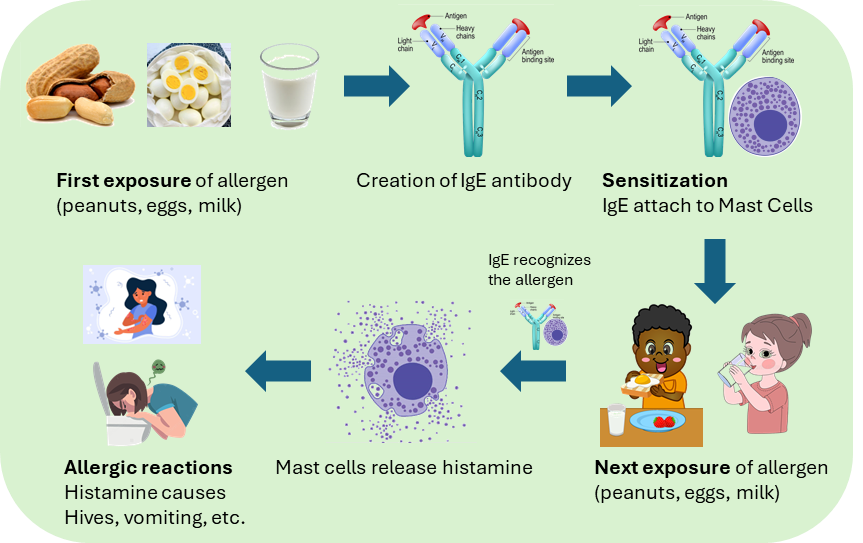
These involve the immune system producing Immunoglobulin E (IgE) antibodies in response to specific food proteins. Upon re-exposure, these antibodies trigger the release of histamine and other chemicals, leading to symptoms like hives, vomiting, and anaphylaxis.

Stage-1: First Exposure

When you eat food you're allergic to for the first time (like peanuts, milk or eggs), your immune system creates a special antibody called IgE against it.

Stage-2: Sensitization

These IgE antibodies attach to cells in your body called mast cells, which are part of your immune system.

Stage-3: Next Exposure

The next time you eat that food, the IgE antibodies recognize it and trigger those mast cells to release chemicals like histamine.

Stage-4: Allergic Reaction

This release causes symptoms like: Hives or skin rash, Vomiting or diarrhea In severe cases, anaphylaxis, a life-threatening reaction that needs immediate medical attention


IgE-mediated food allergy symptoms

Neurological

Ocular

Oropharyngeal

Upper Respiratory

Cardiovascular

Lower Respiratory

Cutaneous

Gastrointestinal

Diagnosis involves

These tests help confirm the presence of IgE antibodies and identify the specific food allergens.

Treatment Plan

Immediate Management

  • Mild to Moderate Reactions: Oral antihistamines (e.g., Benadryl, Zyrtec)
  • Severe Reactions / Anaphylaxis:
    • Intramuscular epinephrine (EpiPen)
    • Call emergency services (911)
    • Monitor for biphasic reactions

Long-Term Management

  • Strict avoidance of allergenic food
  • Emergency preparedness: Carry antihistamines and epinephrine auto-injectors
  • Oral Immunotherapy (OIT): Gradual exposure to allergens under medical supervision; may increase tolerance
  • Biologic therapy: Omalizumab (Xolair injections) to reduce IgE levels and allergic response

Prevention Strategies

Non-IgE-Mediated Food Allergies

Your immune system still reacts to food protein, but it uses different immune cells (like T-cells) instead of IgE antibodies.

This reaction causes inflammation, especially in the digestive system.

Because the reaction is delayed, it’s harder to link the symptoms to a specific food.

They are harder to diagnose due to the lack of specific blood tests.

Non-IgE-Mediated food allergy symptoms

These allergies often affect the gut but can also show up on the skin or in behavior. Symptoms include:

Treatment Plan

Examples of Non-IgE Allergic Conditions

Some specific conditions include:
  • FPIES (Food Protein-Induced Enterocolitis Syndrome): severe vomiting and diarrhea in infants, often triggered by cow’s milk or soy
  • Eosinophilic Esophagitis (EoE): inflammation of the esophagus causing swallowing difficulties
  • Proctocolitis: blood-streaked stools in babies, often linked to cow’s milk or soy

How Are They Diagnosed?

There’s no reliable blood or skin test for non-IgE allergies. Instead, doctors use:

  • Elimination diets: removing suspected foods from the diet
  • Rechallenge tests: reintroducing the food to see if symptoms return

This process can take weeks or months, and keeping a food diary is often recommended.

Treatment and Management

  • Medications like corticosteroids may help with inflammation
  • Avoid the trigger foods once identified
  • Nutritional support is important, especially for children
  • Some children outgrow these allergies over time

Top 9 US Food Allergens

Milk

Milk is one of the most common food allergens, especially in children, and reactions can range from mild hives to life-threatening anaphylaxis. The body’s immune system reacts to the proteins in milk such as casein and whey. Milk allergies are different and should not be confused with lactose intolerance. Typically, cow’s milk is the most frequent trigger when compared to goat, sheep or buffalo milk. Avoiding milk and milk-derived ingredients is the primary management strategy. It is important to read labels carefully because milk proteins can appear in unexpected foods like baked goods, processed meats, chocolate, etc.

Eggs

Egg allergy is one of the most common food allergies in children, typically involving proteins found in both the egg white and yolk. Reactions can range from skin rashes and digestive issues to severe anaphylaxis, and eggs are often hidden in baked goods, sauces, and vaccines, making avoidance challenging.

Peanuts

Peanut allergy is among the most severe and persistent food allergies, often lasting into adulthood and capable of triggering life-threatening reactions from even trace exposure. It affects millions in the U.S., and due to its prevalence, peanuts are strictly regulated in schools and food manufacturing.

Tree nuts (e.g., almonds, walnuts, cashews)

Tree nut allergy includes reactions to nuts like almonds, walnuts, cashews, and pecans, and is often lifelong, with a high risk of cross-reactivity among different nuts. Individuals with this allergy must be cautious with processed foods, desserts, and ethnic cuisines where nuts are commonly used.

Wheat

Wheat allergy is distinct from gluten intolerance or celiac disease and involves an immune response to proteins in wheat, such as albumin and gliadin. It is most common in children and can cause respiratory, skin, and gastrointestinal symptoms, requiring careful label reading and substitution with alternative grains.

Fish (e.g., salmon, tuna)

Fish allergy typically develops in adulthood and can cause severe reactions to finned fish like salmon, tuna, or cod. It often persists for life and requires vigilance due to fish-derived ingredients in sauces, dressings, and even supplements.

Sesame

Sesame allergy, newly recognized as a major allergen in the U.S., is increasingly common and can cause serious reactions from exposure to seeds, oils, and flavorings. Sesame is frequently found in baked goods, hummus, and ethnic dishes, and its labeling is now federally mandated to help protect allergic individuals.

Shellfish (e.g., shrimp, crab, lobster)

Shellfish allergy, which includes crustaceans like shrimp, crab, and lobster, is one of the most common adult-onset food allergies and is known for causing intense and rapid allergic reactions. It is often lifelong and difficult to manage due to cross-contamination in seafood restaurants.

Soy

Soy allergy, often outgrown by children, is complicated by soy’s presence in many processed foods and vegetarian products. About 0.4% of infants in the U.S. are allergic to soy. Many children outgrow it by age 10. Soy is found in many foods, including tofu, soy milk, soy sauce, miso, tempeh, edamame, and processed foods. There are few hidden soy sources as well, for example, hydrolyzed vegetable protein, textured vegetable protein (TVP), flavorings, vegetable broth, and even some cosmetics or pet foods.